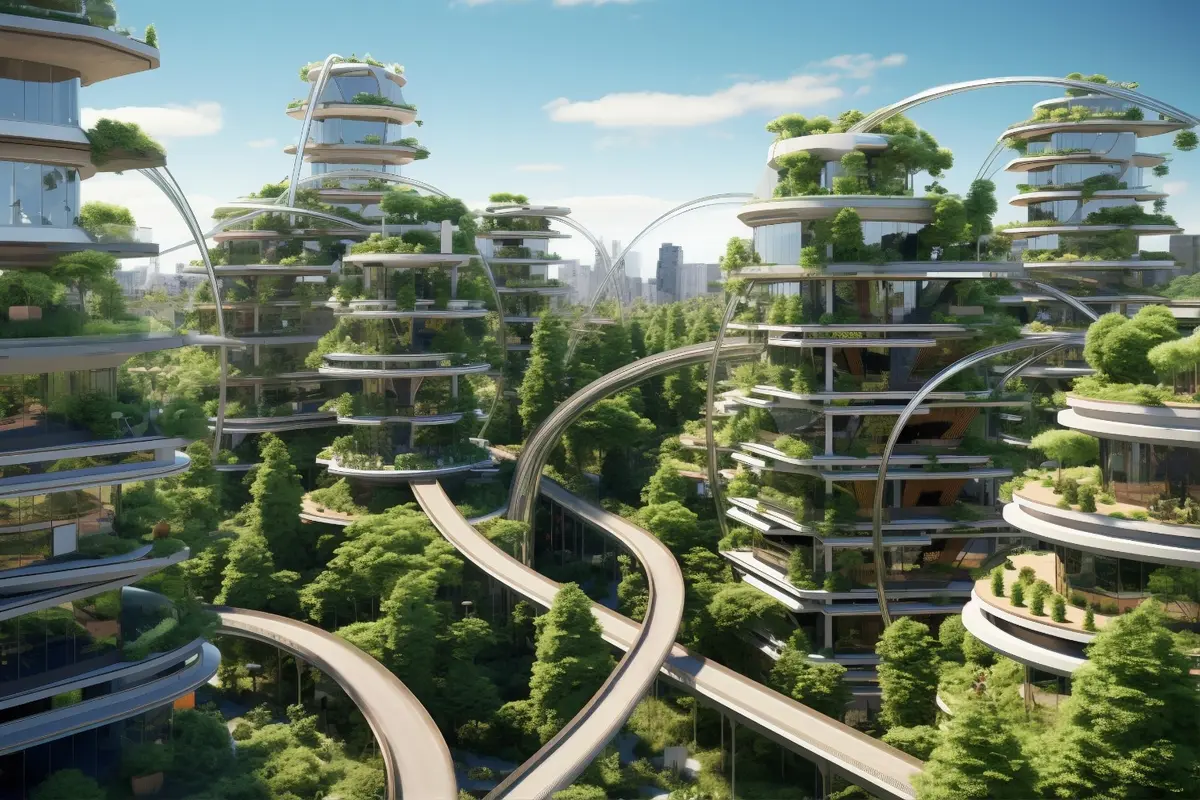
The Future of Sustainable Architecture
As we face unprecedented environmental challenges, the architecture industry is undergoing a fundamental transformation. Sustainable design is no longer just a trend—it's becoming the standard for responsible building practices.
The Rise of Green Building Materials
One of the most significant developments in sustainable architecture is the emergence of innovative, eco-friendly building materials. From recycled steel and reclaimed wood to cutting-edge bio-based composites, architects now have access to materials that significantly reduce environmental impact without compromising on quality or aesthetics.
Cross-laminated timber (CLT) has emerged as a game-changer in sustainable construction. This engineered wood product not only sequesters carbon but also offers excellent structural properties, making it suitable for high-rise construction. We've successfully incorporated CLT in several of our recent projects, achieving both sustainability goals and striking architectural forms.
Energy-Efficient Design Strategies
Modern sustainable architecture goes beyond material selection to encompass comprehensive energy strategies. Passive design principles, such as optimal building orientation, natural ventilation, and strategic window placement, can dramatically reduce energy consumption.
We're also seeing remarkable advances in building-integrated renewable energy systems. Solar panels are becoming more aesthetically pleasing and efficient, while geothermal systems provide reliable heating and cooling with minimal environmental impact.
The Role of Technology
Smart building technologies are revolutionizing how we approach sustainability. Advanced building management systems can optimize energy usage in real-time, while IoT sensors provide valuable data for continuous improvement of building performance.
Building Information Modeling (BIM) has become essential for sustainable design, allowing architects to simulate and optimize building performance before construction begins. This technology enables us to make informed decisions about materials, systems, and design strategies that maximize sustainability.
Looking Ahead
The future of sustainable architecture is bright, with emerging technologies like 3D printing with sustainable materials, living building materials that can self-repair, and carbon-negative concrete showing tremendous promise.
As architects, we have a responsibility to lead this transformation. Every project is an opportunity to demonstrate that sustainable design doesn't require compromise—it enhances both the built environment and the human experience within it.

